FULL-STACK ENGINEER / APPLIED AINEW YORK · SESSION 001
01 / FIND THE FRICTIONI built the forms.
Then rebuilt the process.
I shipped a product’s forms in the legacy system before proposing a replacement. Two API calls stood between a change and seeing the page.
The bottleneck wasn’t the PDF.
It was working blind.
02 / CHANGE ITMake the work
visible.
I built a single engine around templates I could open, see, and refine. Claude helped with the first draft; engineers and business teams checked the finish.
One product was the proving ground.
03 / PROVE ITTwo weeks.
Two days.
Elapsed development and testing for a product’s longest application form. The approach now powers every form across four products.
Create a document of your own ↗
SIMPLIFY THE WORK.Then connect the moving parts. ↓
TRUST WHAT ACTUALLY HAPPENED.Then make it observable. ↓
ON THE WORKBENCH / EXPERIMENT IN PROGRESS
chatAssist
Better context. Clearer issue triage.
An experiment in giving an existing AI system the context and constraints it needs to triage an issue well.
KNOWLEDGERULESSKILLSCONTEXT
Being shaped. Implementation details and results will follow.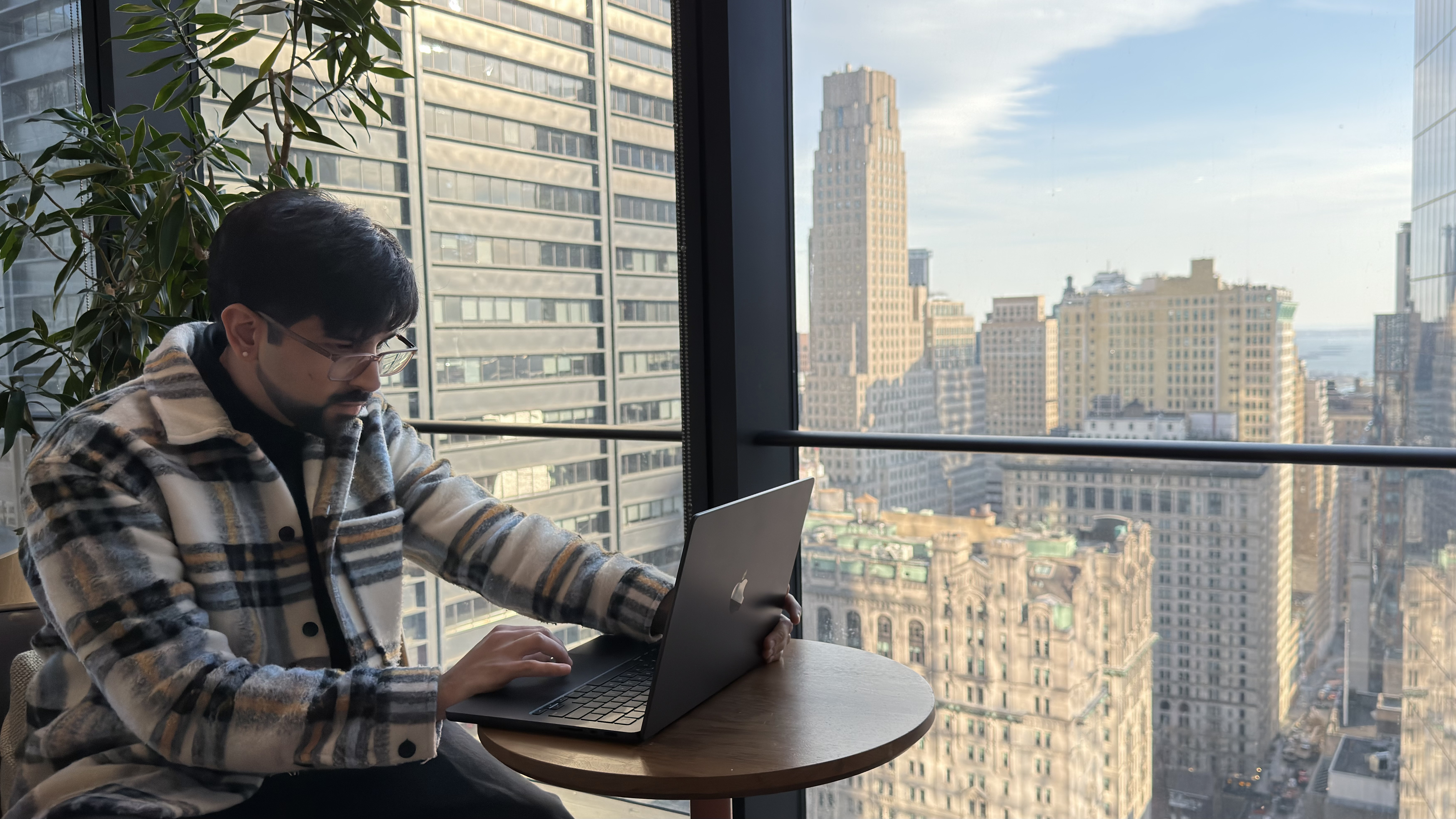
RUDRANSH NAGAR / NEW YORK
BEHIND THE WORK
Curiosity doesn’t
clock out.
I’m Rudransh, a full-stack engineer building production software and applied AI at Afficiency in New York.
I like taking a problem all the way through: understanding where people get stuck, choosing what to change, and staying with it until it works in their hands.
After work, I make music in Logic Pro, sing, and play guitar, bass, and keys. I enjoy figuring out how individual parts become something worth experiencing.
Tools & techniques +